




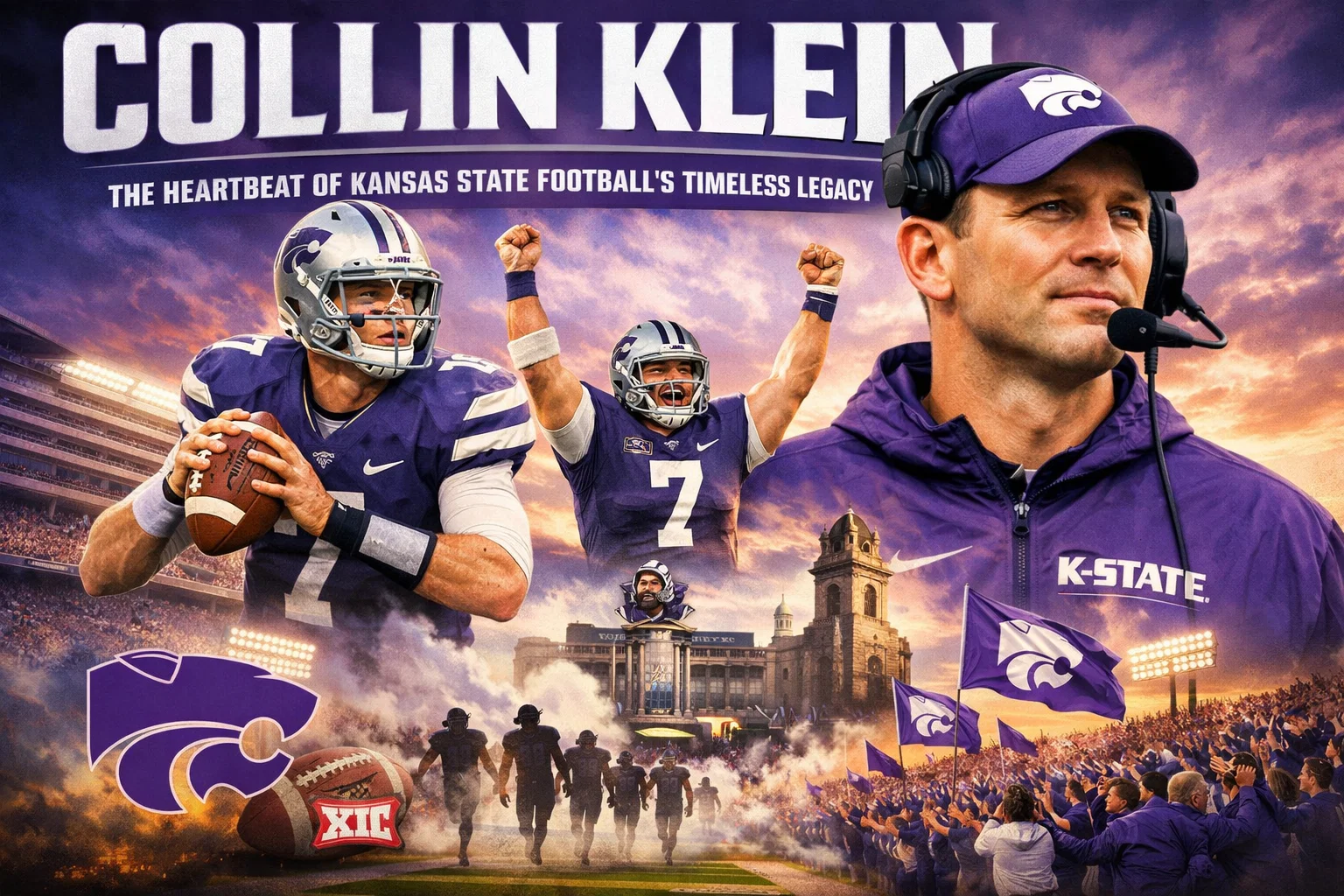
Collin Klein: The Heartbeat of Kansas State Football’s Timeless Legacy
The name Collin Klein echoes through the halls of Bill Snyder Family Stadium with a unique resonance. It’s not just a name from a record book; it’s a symbol of toughness, intelligence, and an almost mythical embodiment of the Kansas State “Wildcat Way.” For fans, Collin Klein represents the ultimate quarterback who left everything on the field
. For players and aspiring coaches, he is the blueprint for a football lifer who has successfully transitioned his on-field genius to the sidelines. This article explores the multifaceted journey of Collin Klein, from his Heisman-finalist glory days to his rise as one of college football’s most respected and innovative offensive minds. His story is a masterclass in leadership, adaptability, and building a lasting legacy.
The Unforgettable Playing Career: “Optimus Klein” Takes the Field
Collin Klein’s ascent from a little-recruited athlete to a college football superstar is the stuff of legend in Manhattan, Kansas. Initially playing wide receiver and seeing spot duty, his destiny changed when he took over as the starting quarterback. What followed was a two-year reign defined by sheer willpower and production. Klein wasn’t a conventional passer; he was a 6-foot-5, 226-pound force of nature who operated Coach Bill Snyder’s offense with surgical precision and brutish physicality. His 2012 season, where he finished as a Heisman Trophy finalist, cemented his iconic status, leading the Wildcats to a Big 12 championship and a Fiesta Bowl berth.
The statistics only tell part of the story. Collin Klein scored a staggering 56 touchdowns (37 rushing, 19 passing) in that magical 2011-2012 period, often literally carrying defenders across the goal line. He earned the nickname “Optimus Klein” for his robotic efficiency and unbreakable nature. Beyond the numbers, his legacy as a player is defined by leadership, intelligence, and an unmatched work ethic. He was the extension of his hall-of-fame coach on the field, a trait that foreshadowed his future career. The image of a battered but unbeatable Collin Klein willing his team to victory remains the definitive portrait of Kansas State football grit.
The Coaching Philosophy: Translating Grit into Strategy
After a brief professional stint, Collin Klein naturally gravitated toward coaching, beginning as a graduate assistant at Northern Iowa and later at Kansas State. His rapid rise through the ranks—from quarterbacks coach to co-offensive coordinator and eventually to full offensive coordinator—speaks to his innate understanding of the game. Klein’s coaching philosophy is a direct reflection of his playing style: physical, disciplined, and intelligent. He doesn’t just draw up plays; he installs a system built on execution, toughness, and putting players in positions that maximize their unique skills.
Klein’s offensive schemes are a modern evolution of the principles he mastered as a player. He blends a powerful, downhill rushing attack with sophisticated play-action and quarterback run game elements, making the offense multifaceted and difficult to defend. His ability to develop quarterbacks, from Skylar Thompson to Will Howard and Avery Johnson, highlights his strength as a teacher. He teaches the “why” behind every read and every block, empowering his players with the same football IQ he possessed. For Collin Klein, coaching is about building a system where toughness and intelligence are not mutually exclusive but are the twin pillars of success.
Key Mentors and Influences: Building on the Wildcat Foundation
No discussion of Collin Klein is complete without acknowledging the profound influence of Hall of Fame Coach Bill Snyder. Snyder’s “16 Goals for Success” and his meticulous, detail-oriented approach to building a program were ingrained in Klein during his formative years. Snyder didn’t just teach X’s and O’s; he taught a life philosophy centered on discipline, improvement, and humility. Klein absorbed these lessons completely, first as a player who embodied them and now as a coach who perpetuates them. The Snyder influence is the bedrock upon which Klein has built his own coaching identity.
Beyond Snyder, Klein’s coaching journey has been shaped by working alongside other respected minds like Chris Klieman, who entrusted him with the offensive reins. This blend of the classic Snyder foundation with Klieman’s contemporary program-building has given Klein a unique hybrid perspective. He respects timeless fundamentals while adapting to the modern pace and spread concepts of today’s game. This synthesis allows him to connect with veteran football purists and the new generation of athletes simultaneously, making his coaching style both traditional and progressive. The mentorship he received created a coach who is both a product of a specific culture and an innovator within it.

Statistical Impact and Career Milestones
To fully grasp the scope of Collin Klein’s impact, one must look at the tangible results, both on the field as a player and on the sideline as a coordinator. His playing career numbers are historic within the Kansas State record books, while his coaching tenure has seen the Wildcats’ offense become one of the most balanced and efficient in the Big 12. The table below breaks down the key milestones that define his legacy in both roles:
| Category | As a Player (Key Seasons: 2011-2012) | As a Coach (Key Role: Offensive Coordinator) |
|---|---|---|
| Signature Achievement | 2012 Heisman Trophy Finalist (3rd Place) | 2022 Big 12 Championship Offensive Play-Caller |
| Team Success | Led K-State to 2012 Big 12 Championship & Fiesta Bowl | Orchestrated offense for 2022 & 2023 Big 12 Championship appearances |
| Statistical Highlight | Accounted for 56 Total TDs (37 rushing, 19 passing) in ’11 & ’12 | Coached a 3,000-yd passer & 1,000-yd rusher in same season (2022) |
| Defining Trait | Unparalleled physicality & red-zone efficiency (27 rush TD in 2011) | Development of multiple QBs & a powerful, adaptive run game |
| Legacy Metric | Holds K-State record for most rushing TDs by a QB (56 career) | Consistently produced a Top 4 scoring offense in the Big 12 |
The Leadership Blueprint: More Than X’s and O’s
What truly sets Collin Klein apart is a leadership quality that transcends scheme. As a player, he led by visceral example, taking hits and fighting for extra yards that inspired his entire team. His calm demeanor under pressure and relentless preparation earned him universal respect in the locker room. This innate ability to connect and elevate those around him has seamlessly translated to his coaching career. Players don’t just listen to him because he’s the coordinator; they believe in him because he’s lived the exact challenges they face and has proven what is possible through dedication.
This blueprint is built on authenticity and relational trust. Klein understands the mental and physical grind of a season because he’s endured it at the highest level. He can coach with a unique blend of empathy and demanding excellence. A former player once noted, “He doesn’t ask you to do anything he didn’t do himself, and usually harder.” This credibility is priceless in building a cohesive, resilient unit. For Collin Klein, leadership is about building a culture where accountability and mutual trust drive performance, creating an environment where players are empowered to succeed.
The Future Trajectory and Lasting Influence
Given his rapid ascent and proven success, the future for Collin Klein is exceptionally bright. He is consistently mentioned among the top young offensive minds in college football and is a natural candidate for future head coaching positions. His deep roots at Kansas State and clear affinity for the program make him a potential successor-in-waiting, but his talents would be coveted by programs across the country. The key to his next step will be finding a situation that values the culture-first, tough-minded approach he has perfected, whether that’s in Manhattan or elsewhere.
Regardless of his specific career path, the influence of Collin Klein on Kansas State and college football is already cemented. He represents a bridge between eras—the last great quarterback of the Snyder dynasty and a leading architect of its modern resurgence under Klieman. His journey provides a roadmap for how elite players can transition into elite coaches by leveraging their experience, intelligence, and personal character. The legacy of Collin Klein is a story still being written, but its foundational chapters have already established him as one of the most important figures in the history of Wildcat football.
Conclusion
From “Optimus Klein” the unstoppable player to Collin Klein the innovative coach, his narrative is a powerful testament to the enduring values of hard work, football intelligence, and authentic leadership. He is not a celebrity coach reliant on flash; he is a builder, a teacher, and a proven winner whose impact is measured in championships developed, players mentored, and a standard upheld. For anyone studying the game, the career of Collin Klein offers invaluable lessons in resilience, adaptation, and how to leave a legacy that lasts far beyond Saturday’s final whistle. He is, and will remain, the heartbeat of a timeless football tradition.
Frequently Asked Questions About Collin Klein
What is Collin Klein’s most famous nickname and why?
Collin Klein earned the nickname “Optimus Klein” during his playing days, a play on the Transformers hero Optimus Prime. It stuck because of his robotic efficiency in scoring touchdowns, his seemingly indestructible nature, and his leadership in carrying the Kansas State offense on his back, much like the Autobot leader.
What records did Collin Klein set as a player at Kansas State?
As a quarterback, Collin Klein set the Kansas State career record for rushing touchdowns by a quarterback with 56. His 2011 season, where he ran for 27 touchdowns, remains one of the most prolific rushing seasons for a QB in NCAA history and was key to his Heisman-finalist campaign in 2012.
What is Collin Klein’s coaching style as an offensive coordinator?
Collin Klein’s coaching style is a direct reflection of his playing style: physical, intelligent, and adaptable. He builds offenses around a powerful run game and leverages it with play-action and quarterback run elements. He is known as an exceptional developer of quarterback talent, emphasizing decision-making and toughness.
Has Collin Klein been considered for head coaching jobs?
Yes, due to his success as Kansas State’s offensive coordinator, Collin Klein has emerged as a hot name in coaching circles and has interviewed for head coaching positions. His deep ties to K-State culture and his proven ability to develop players and call games make him a strong candidate for a top job in the near future.
How did Bill Snyder influence Collin Klein’s career?
Hall of Fame Coach Bill Snyder’s influence on Collin Klein is profound and foundational. Snyder recruited and developed him, instilling the famous “16 Goals for Success” philosophy. Klein’s entire approach to the game—his discipline, preparation, and team-first mentality—is a direct product of his time under Snyder, both as a player and a young coac