





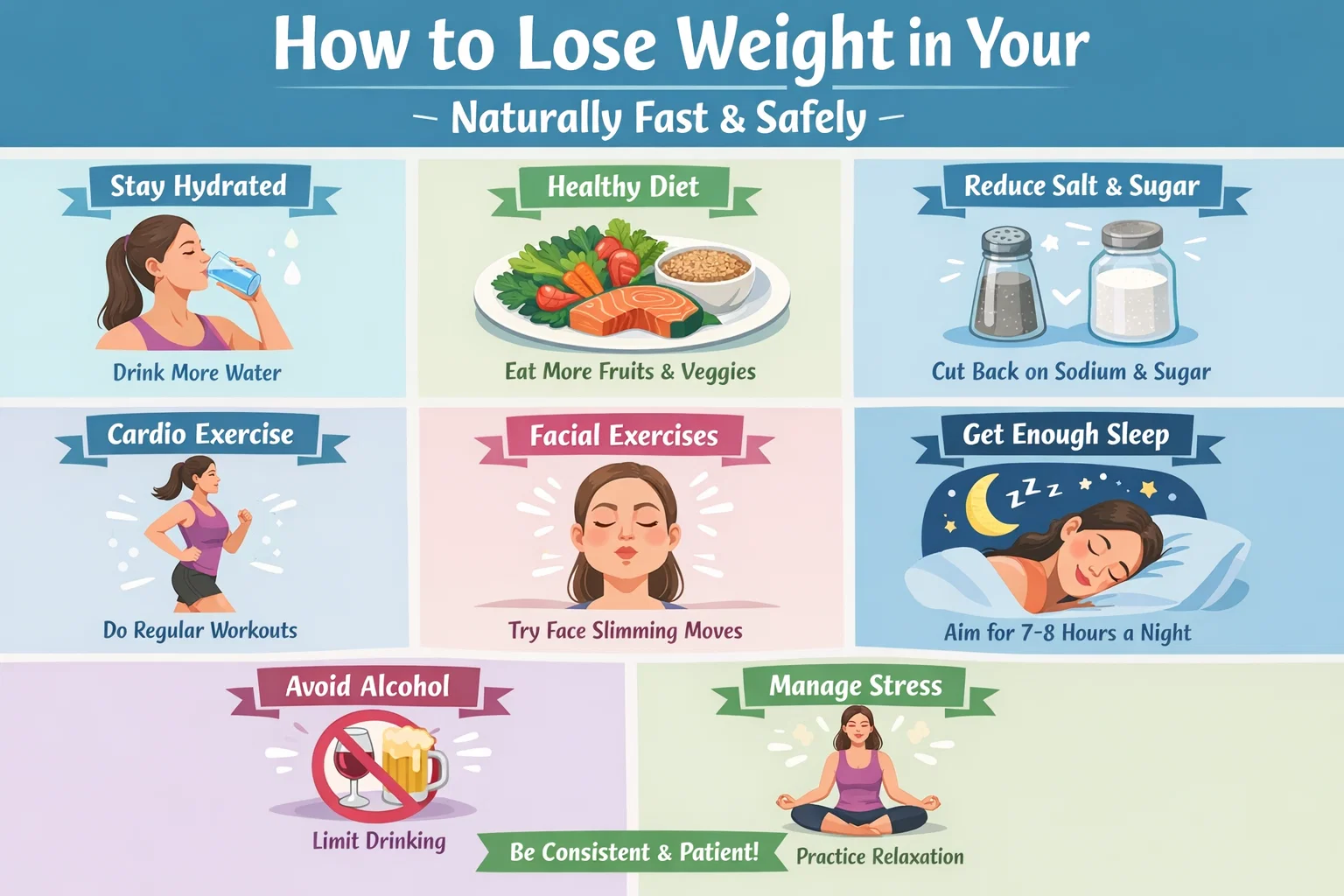
How to Lose Weight in Your Face Naturally Fast Safely
If you have ever looked in the mirror and felt your face appears fuller than the rest of your body, you are not alone. Many people search for how to lose weight in your face because facial fullness affects confidence, photos, and first impressions. The good news is that facial fat and puffiness respond well to the right combination of nutrition, lifestyle habits, and realistic expectations.
This guide is designed as a definitive, expert-backed resource. It explains what truly works, what does not, and how to approach facial slimming in a healthy, sustainable way. By the end, you will understand how to lose weight in your face without chasing myths or damaging your health.
Understanding Facial Fat and Facial Structure
Facial fullness is influenced by genetics, bone structure, hormones, and overall body fat. Some people naturally store more fat in the cheeks or jawline, even at lower body weights. This is why two people with the same weight can have very different face shapes.
It is also important to separate facial fat from facial puffiness. Water retention, inflammation, and poor sleep can make the face appear swollen even when fat levels are unchanged. Knowing this distinction helps set realistic expectations for how to lose weight in your face effectively.
The Truth About Spot Reduction
One of the biggest misconceptions in fitness and beauty is spot reduction. You cannot selectively burn fat from only your face through exercises or creams. Fat loss occurs systemically, meaning the body decides where fat is lost first.
Understanding this reality is empowering. When you focus on overall fat loss and lifestyle balance, the face naturally follows. This principle sits at the core of every legitimate approach to how to lose weight in your face.
How Overall Weight Loss Impacts Facial Slimming
As total body fat decreases, facial fat usually decreases as well. For many people, the face is one of the first places to show change once consistent habits are in place. For others, it is one of the last, which is normal and largely genetic.
The key is patience and consistency. Rapid crash dieting may temporarily reduce facial fullness, but it often leads to muscle loss and rebound weight gain, which can make facial softness worse over time.
Nutrition Strategies That Support a Slimmer Face
What you eat has a direct effect on facial appearance. Diets high in sodium, refined carbohydrates, and ultra-processed foods promote water retention and inflammation, leading to puffiness around the cheeks and eyes.
A nutrient-dense diet rich in lean protein, vegetables, fruits, and healthy fats supports steady fat loss. When people ask how to lose weight in your face, nutrition is often the most underestimated factor.
Hydration and Sodium Balance
Dehydration causes the body to retain water, which often shows up in the face first. Drinking adequate water helps flush excess sodium and reduces facial bloating.
At the same time, moderating salt intake matters. You do not need to eliminate salt completely, but consistently high sodium intake makes facial puffiness far more likely, especially in warm climates or sedentary lifestyles.
The Role of Exercise in Facial Fat Loss
Cardiovascular exercise plays a critical role in reducing overall body fat. Activities like brisk walking, cycling, swimming, or jogging increase calorie expenditure and improve metabolic health.
Strength training also matters. how to lose weight in your face Building lean muscle raises resting metabolic rate, making it easier to lose fat over time. Together, these form the most reliable foundation for how to lose weight in your face naturally.
Facial Exercises and Muscle Tone
Facial exercises strengthen the muscles beneath the skin, which can improve firmness and definition. They do not burn facial fat directly, but they may enhance the appearance of a slimmer face once fat loss occurs.
Think of facial exercises as polish, not the foundation. When paired with healthy habits, they can improve jawline clarity and cheek structure without unrealistic promises.
Sleep, Stress, and Hormonal Influence
Sleep deprivation raises cortisol, a stress hormone linked to fat storage and water retention. Chronic stress can make the face appear rounder even when diet and exercise are on track.
Quality sleep and stress management are often overlooked answers to how to lose weight in your face. Consistent sleep schedules and relaxation practices can noticeably reduce facial puffiness.
Dewald Brevis: South Africa’s Prodigy and the Evolution of a Modern Power-Hitter
Alcohol, Sugar, and Facial Inflammation
Alcohol dehydrates the body and triggers inflammatory responses that lead to facial swelling. Sugar spikes insulin and promotes fat storage, particularly when consumed frequently.
Reducing both can lead to visible facial changes within weeks. Many people notice their face looks leaner simply by limiting weekend drinking and sugary snacks.
Lymphatic Drainage and Facial Massage
The lymphatic system helps remove excess fluid and waste from tissues. Gentle facial massage, gua sha, or jade rolling can temporarily reduce puffiness by improving lymphatic flow.
These techniques do not remove fat, but they are useful tools for managing swelling. They complement, rather than replace, the core strategies behind how to lose weight in your face.

Genetics and Realistic Expectations
Genetics determine facial shape, cheekbone prominence, and fat distribution. Some people will always have softer cheeks, even at lower body fat levels.
Accepting genetic influence helps avoid frustration. The goal is not to change your identity, but to reach the healthiest and most confident version of your natural face shape.
Common Myths About Facial Weight Loss
Many products claim to melt face fat quickly, from slimming straps to miracle creams. There is no credible scientific evidence supporting these claims.
Understanding myths protects your time, money, and health. Sustainable strategies remain the only proven path when learning how to lose weight in your face safely.
Medical and Cosmetic Context
In certain cases, hormonal imbalances or medications contribute to facial fullness. Consulting a healthcare professional may be appropriate if facial swelling appears sudden or unexplained.
Cosmetic procedures exist, but they should never replace healthy habits. Most people can achieve meaningful improvement without invasive interventions.
Facial Weight Loss Factors Comparison
| Factor | Primary Impact | Short-Term Effect | Long-Term Effect |
|---|---|---|---|
| Overall fat loss | Reduces facial fat | Moderate | High |
| Reduced sodium | Lowers puffiness | High | Moderate |
| Hydration | Decreases water retention | High | Moderate |
| Facial exercises | Improves muscle tone | Low | Moderate |
| Sleep quality | Balances hormones | Moderate | High |
This comparison highlights why combined strategies outperform isolated tactics.
Expert Perspective on Facial Fat
As one board-certified nutritionist explains, “Facial fat is simply part of overall fat distribution. When clients focus on sustainable lifestyle changes, their face almost always reflects that progress.”
This perspective reinforces why patience and consistency matter more than shortcuts.
Long-Term Sustainability and Confidence
Chasing rapid changes often leads to disappointment. A steady approach produces results that last and supports overall health.
When you focus on habits rather than fixes, how to lose weight in your face becomes part of a broader, healthier lifestyle rather than a constant struggle.
Conclusion
Learning how to lose weight in your face requires clarity, not gimmicks. Facial fat responds to overall fat loss, balanced nutrition, hydration, sleep, and stress management. While you cannot target the face alone, consistent healthy habits lead to visible, natural slimming over time.
By aligning expectations with biology and focusing on sustainable routines, you can achieve a slimmer facial appearance while protecting your long-term health and confidence.
Frequently Asked Questions
How long does it take to see results when trying to lose facial weight?
Most people notice reduced puffiness within days and visible fat loss within several weeks when following proven strategies for how to lose weight in your face.
Can facial exercises alone slim my face?
Facial exercises improve muscle tone but do not remove fat. They work best alongside overall weight loss methods.
Why is my face chubby even though I am thin?
Genetics, water retention, hormones, and sodium intake all affect facial fullness, regardless of body size.
Does drinking more water really help facial slimming?
Yes, proper hydration reduces water retention and supports metabolic processes linked to how to lose weight in your face.
Is it safe to try rapid methods to slim the face?
Rapid methods often cause temporary water loss and rebound effects. A gradual, sustainable approach is the safest and most effective.