




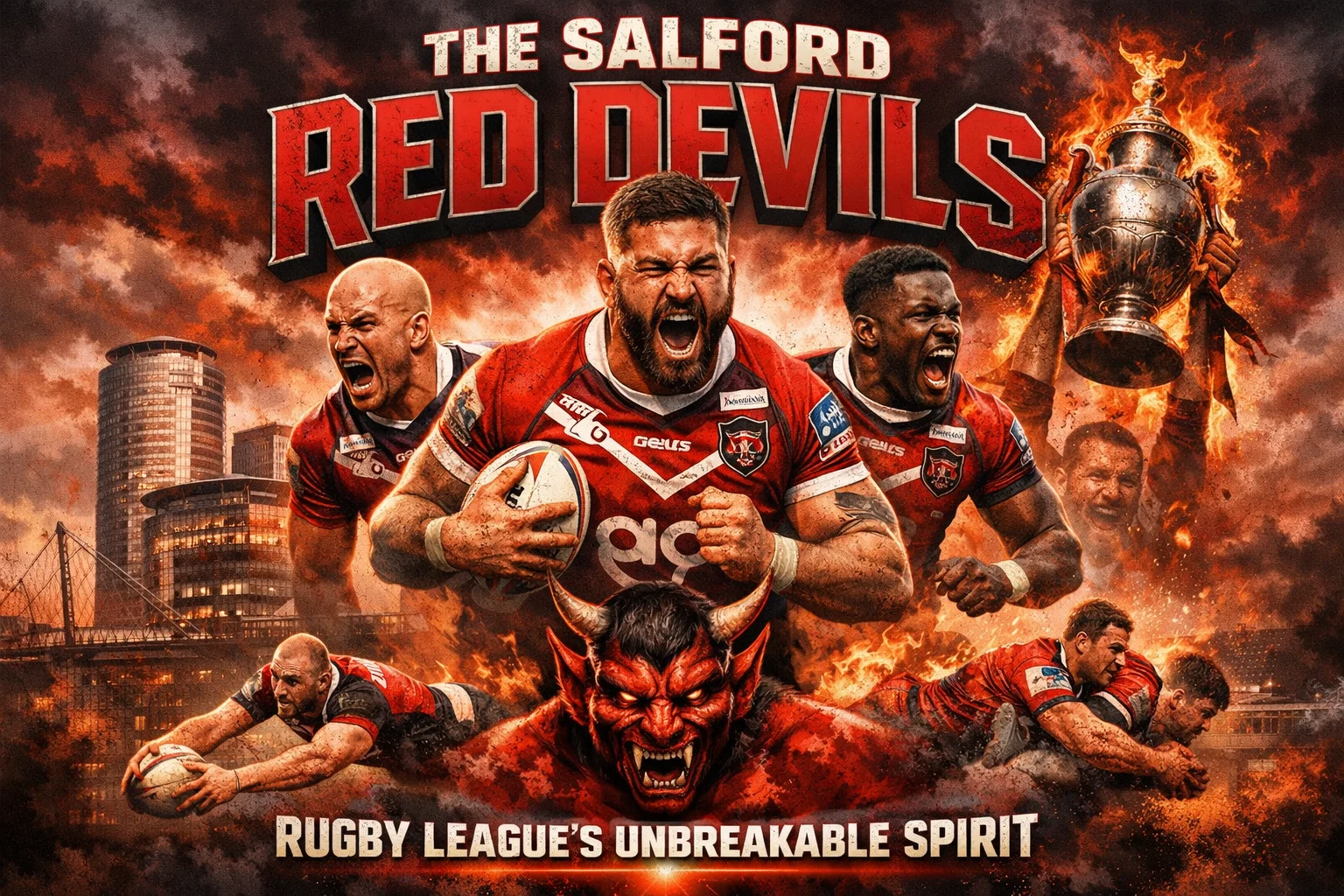
The Salford Red Devils: Rugby League’s Unbreakable Spirit
In the heart of Greater Manchester, where the industrial past meets a dynamic sporting future, lies a club defined by resilience and passion: the Salford Red Devils. More than just a Super League team, the Red Devils embody a story of community, dramatic rebirth, and an unyielding pursuit of glory against the odds. From their formative years at the iconic Willows to the modern ambitions staged at the Salford Community Stadium, their journey is a compelling testament to rugby league’s soul. This article delves deep into the rich tapestry of the Salford Red Devils, exploring their history, modern identity, and the fervent support that makes them a unique and enduring force in the sport.
The Foundation and Early History of the Club
The origins of the Salford Red Devils stretch back to 1873, making them one of rugby league’s founding pioneers. Initially formed as Salford Football Club, they were central to the Northern Union’s split from the Rugby Football Union in 1895, a revolution that created the sport we know today. For decades, they were simply known as Salford, building a reputation for entertaining, attacking football that captured the imagination of their local fanbase long before the ‘Red Devils’ moniker was adopted.
This early era was marked by significant achievement, including Challenge Cup victories in the 1930s led by legendary figures like Gus Risman. The club’s identity was forged in these formative decades, characterized by a blend of skillful play and working-class grit that mirrored the city itself. The move to the iconic Willows ground in 1901 provided a spiritual home for over a century, a place where memories were made and the club’s deep-rooted connection with its community was solidified, setting the stage for the modern Salford Red Devils entity.
The Birth of the Red Devils Identity
The transformation into the Salford Red Devils occurred in 1999, a rebrand inspired by the club’s predominant playing colors and a desire to forge a more marketable, intimidating identity. The change was not merely cosmetic; it signified a new ambition to compete at the highest level of the sport with a distinct and recognizable brand. While some traditionalists initially mourned the loss of the simple ‘Salford’ name, the ‘Red Devils’ persona gradually took hold, representing a fiercer, more modern outlook for the Super League era.
This new identity coincided with a period of significant transition for the club, both on and off the field. It was a statement of intent to shake off any lingering mediocrity and attack the future with renewed vigor. The devil logo became a symbol of pride on chests across Salford, unifying the team and its supporters under a bold new banner. This evolution demonstrated the club’s willingness to adapt and fight for its place in a rapidly professionalizing sport, ensuring the Salford Red Devils name would resonate with a new generation of fans.
Home Grounds: From The Willows to the Salford Stadium
For 110 years, the heartbeat of the club was The Willows. More than a stadium, it was a character-filled, intimate fortress where fans were close to the action, generating an atmosphere that often belied the club’s size. Its narrow terraces and iconic floodlight pylons are etched into the folklore of the Salford Red Devils. The decision to leave in 2011 was emotionally charged but driven by necessity, as modern rugby league demanded facilities that could provide greater financial stability and improved fan experience.
The move to the Salford Community Stadium (now known as the Salford Stadium) in 2012 marked a monumental shift. Sharing the state-of-the-art venue with Salford City Football Club, the Salford Red Devils gained access to superior amenities and a pitch that allowed for a more expansive style of play. While some nostalgia for The Willows remains, the new ground represents the club’s future—a professional, community-focused hub designed to sustain top-flight rugby league and attract a broader audience for generations to come.
Modern Era and Super League Campaigns
The modern chapter for the Salford Red Devils is a tale of breathtaking highs and challenging realities. The peak came in 2019 with a fairytale run to the Super League Grand Final at Old Trafford, a achievement that captivated the neutral and embodied the club’s ‘against all odds’ spirit. Although they fell short against St Helens, that season, which also included a Challenge Cup final appearance, proved the Salford Red Devils could mix with the sport’s traditional aristocracy through shrewd recruitment and a brilliant, attacking philosophy.
Maintaining that top-four consistency has proven difficult, reflecting the intense financial competition within Super League. The club has become renowned for its ability to unearth and develop exceptional talent, often players deemed surplus elsewhere, who thrive in Salford’s system. This model has kept the Salford Red Devils as perennial playoff contenders and one of the most watchable teams in the competition, consistently punching above their weight and securing memorable victories that define their plucky underdog status.
Key Figures and Club Legends
The story of the Salford Red Devils is illuminated by iconic individuals. Gus Risman, a Hall of Fame inductee, stands as the original colossus, whose leadership and talent delivered the club’s first major honors. In the modern era, charismatic coach Ian Watson engineered the 2019 Grand Final run, building a cohesive, dynamic team that played for each other. His tactical intelligence maximized the squad’s potential and created a golden period for the modern Salford Red Devils.
On the field, the flair of players like Jackson Hastings, the 2019 Man of Steel, epitomized the club’s renaissance under Watson. His creativity and game management were transformative. Similarly, the long-serving dedication of players like Krisnan Inu, who provided moments of magic, and the relentless effort of local products have cemented their places in fans’ affections. These figures, from past to present, are the human faces of the club’s enduring struggle and ambition.
Jerkmate Ranked: An Expert Analysis of a Leading Platform
The Club’s Role in the Salford Community
The bond between the Salford Red Devils and its city is unbreakable. The club is not just a weekend entertainment outlet but a vital community institution. Its extensive community foundation delivers programs in schools, promoting health, education, and rugby league participation across a diverse and often underserved region. This work embeds the club’s values at a grassroots level, ensuring its relevance extends far beyond the 80 minutes on a match day.
This deep community connection is reciprocated by a fiercely loyal, if not always numerous, fanbase. Supporters are known for their passionate, knowledgeable, and resilient nature, sticking with the team through thick and thin. As former player and coach Ian Blease once noted, “The spirit of Salford has always been about fighting for everything. That’s in the DNA of the people and it’s certainly in the DNA of this rugby league club.” This symbiotic relationship is the club’s true bedrock, making the Salford Red Devils a pillar of local identity.
Rivalries and Derby Matches
For the Salford Red Devils, no fixture burns brighter than the local derby against the Wigan Warriors. Separated by just a few miles, this rivalry is rooted in geographical proximity, historical competition, and a classic clash of identities: the perennial powerhouse versus the gritty challenger. Matches are intensely physical and emotionally charged, with Salford victories celebrated with particular fervor as triumphs of spirit over established might.
Another significant rivalry exists with the Warrington Wolves, a contest that has grown in intensity due to numerous playoff and cup clashes in recent years. These high-stakes encounters have added a layer of modern sporting animosity to the fixture. Additionally, meetings with the Leigh Leopards have regained their edge as both clubs frequently battle in the same competitive tier, fighting for local bragging rights and crucial league points in a classic Lancashire showdown.
The Commercial and Strategic Outlook
Navigating the commercial landscape of Super League is the constant, off-field challenge for the Salford Red Devils. Without the vast supporter base of some rivals, the club has had to be innovative and agile. Strategic partnerships, like the historic link with Salford City FC in stadium ownership, have been crucial for sustainability. The club also excels in engaging local businesses and exploring digital avenues to grow its revenue streams and global fan engagement.
The ownership model, with significant involvement from local businessman Andrew Rosler and the passionate support of director Paul King, has provided much-needed stability. The strategy remains clear: develop talent, play an attractive brand of rugby, and continue to be a tough opponent for any team. The long-term vision is to establish the Salford Red Devils as a stable, top-six Super League entity that can occasionally, as in 2019, launch a genuine assault on the ultimate prizes.
| Era | Home Ground | Key Achievement | Defining Characteristic |
| Formative Years (1873-1998) | The Willows (1901-2011) | 1938 Challenge Cup Win | Founding pioneer, community anchor |
| Rebrand & Transition (1999-2011) | The Willows | Super League Establishment | New identity, fighting for top-flight status |
| Modern Era (2012-Present) | Salford Community Stadium | 2019 Grand Final Appearance | Underdog spirit, talent development hub |
Conclusion
The Salford Red Devils narrative is one of perpetual resilience. It’s a club that has repeatedly reinvented itself, from its foundational role in rugby league’s birth to the bold Red Devils rebrand, and from the hallowed turf of The Willows to a modern community stadium. They operate with a distinct identity that balances historical pride with a forward-thinking, opportunistic approach to competition. For fans and neutrals alike, the Salford Red Devils represent the pure, unvarnished heart of the sport—a testament to what can be achieved with passion, smart strategy, and an unbreakable bond with the community. Their future is a continued fight, but it’s a fight they are uniquely built to embrace.
Frequently Asked Questions
Where do the Salford Red Devils play their home games?
The Salford Red Devils play their home matches at the Salford Stadium (also known as the Salford Community Stadium), which they share with Salford City Football Club. They moved to this modern ground in 2012 from their historic home, The Willows.
What are the Salford Red Devils’ most notable achievements?
The club’s most notable achievements include their Challenge Cup wins in 1938 and 1976. In the modern era, their spectacular run to the Super League Grand Final in 2019, alongside a Challenge Cup final appearance the same year, stands as their highest achievement since the competition’s inception.
Why are they called the Salford Red Devils?
The club adopted the ‘Red Devils’ name in 1999 as part of a major rebrand. The name was chosen to reflect the team’s primary kit color and to create a more marketable, fearsome identity for the Super League era, moving on from simply being known as Salford Rugby League Club.
Who is the most famous player to have played for Salford?
While many greats have worn the shirt, Gus Risman is arguably the most legendary figure. A Hall of Famer, he captained Salford to their 1938 Challenge Cup triumph and is considered one of rugby league’s all-time greats. In the modern era, 2019 Man of Steel Jackson Hastings had a transformative impact.
How can I buy tickets to see the Salford Red Devils?
Tickets to see the Salford Red Devils can be purchased directly through the club’s official website, which is the most reliable source. Tickets are also often available at the ticket office at the Salford Stadium on match days, subject to availability.